
DEUTZ: Developing a Product Portfolio for a New Engine Line Based on Data
How can a future product portfolio be developed based on existing data? In the project at DEUTZ, data from central systems was consolidated and made analyzable in order to systematically evaluate variants, specifications, and market requirements for a new engine line. In less than six weeks, this created a robust data foundation for future portfolio decisions.
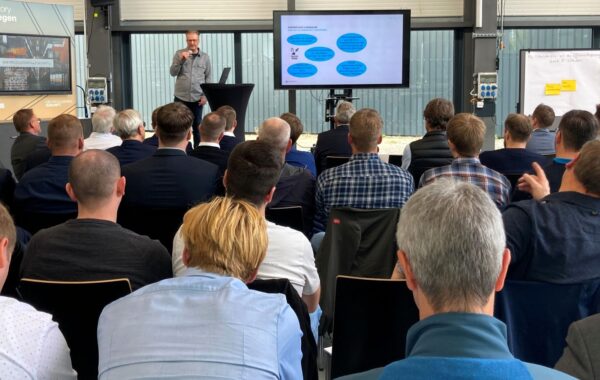
In less than 6 weeks, consolidate data from central systems, make it analyzable, and use it to systematically define a new line of engines based on data—that’s exactly what Frank Bürschgens and Sandra Szech will discuss at the VDMA Product Management Conference, drawing on a recent project at DEUTZ.
As a first step, a cloud analytics platform was set up to enable data-driven evaluation:
-> Which variants are actually needed?
-> Which variants result in the most effort and costs?
-> Which requirements are relevant for effectively targeting existing and new markets?
These insights are now being incorporated into Cquenz as a target system for the new product family—ensuring that decisions remain evaluable and controllable over the long term. At the same time, structured and consistent data lay the foundation for the company’s own GenAI strategy.
What was particularly interesting in the on-site discussions: Many companies currently see this as one of the most effective levers—efficient, pragmatic, data-driven, and suitable for small and medium-sized businesses.
The DEUTZ example illustrates how existing company data can serve as the foundation for developing a future product portfolio. Variants and configurations can be evaluated in terms of market demand, effort, and costs, and translated into a structured vision for the future product family. Product portfolio analysis thus evolves from a one-off assessment to a data-driven basis for decision-making.